Staring at a pristine, empty notebook without a clear goal in what to write is a universal intimidation point. The biggest hurdle for anyone looking to start journaling isn’t picking between fountain pen inks or choosing a daily format; it’s figuring out what to actually write once the calendar dates are filled.
And whatever you do, don't let social media convince you that you need to drop hundreds of dollars on haul videos, artisanal stickers, and luxury fountain pens before you're "allowed" to put ink to paper.

Many newcomers assume an analog planner is strictly for appointment logistics, and if their Google Calendar already handles that, they wonder why they should bother. But as actual data shows, treating a journal like a high-maintenance chore, or a budget-draining aesthetic exercise, completely misses the point of why people keep coming back to paper in the first place.
Tokyo-based community space Notebook Atelier (手帳アトリエ) recently conducted a detailed survey of 415 dedicated planner users to find out what people actually write in their journals on a daily basis. The findings reveal a modern stationery culture that has pivoted away from corporate scheduling toward mental organization, habit tracking, and personal reflection.

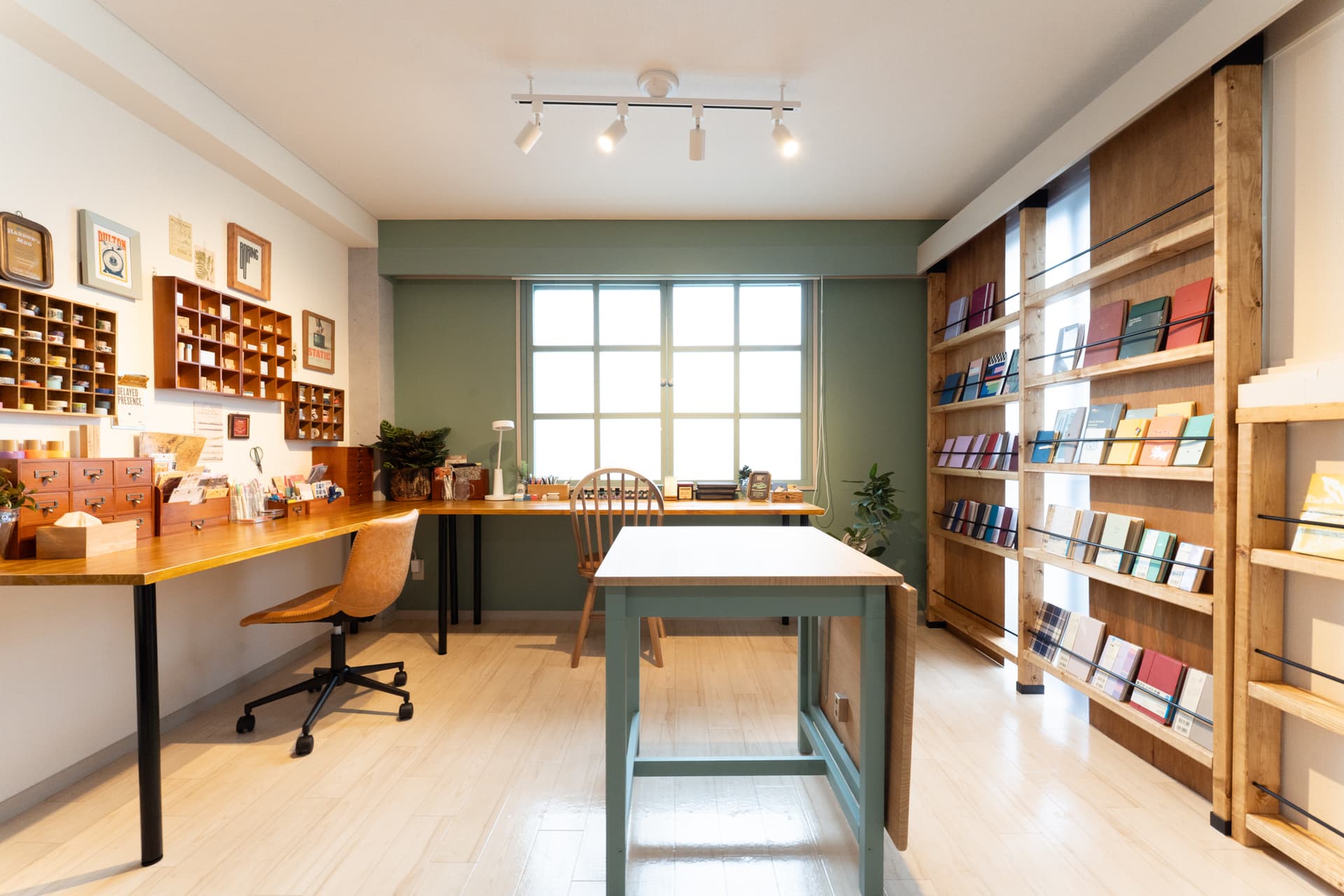
Notebook Atelier's new location in Tokyo, Japan
Over 80% Use Their Planners for Diaries and Thought Organization
While basic schedule tracking remains the single most common entry type, recorded by 77% of respondents, planners in Japan are rarely treated as pure appointment books.
Over 80% of respondents use their daily pages to log reflective entries, personal diaries, and unstructured thinking.
When asked to rank what they write in order of personal importance, the breakdown reveals a wide spectrum of daily records:

Schedules & Future Appointments (予定): 77% (321 respondents)
Daily Diary & Events (日記・その日のできごと): 67% (280 respondents)
To-Do Lists & Task Management (やること): 56% (233 respondents)
Ideas & Brain Dumps (アイデア・考えごと): 35% (144 respondents)
Reflective Journaling (ジャーナリング): 29% (121 respondents)
Physical Health & Mood Logs (体調・気分): 27% (113 respondents)
Goals & Habit Tracking (目標・習慣の記録): 26% (109 respondents)
Work Project Notes (仕事のメモ): 21% (86 respondents)
Fandom & Hobby Logs (Oshikatsu / 推し活の記録): 17% (69 respondents)
Family & Parenting Notes (家族・子育ての記録): 16% (66 respondents)
Reading Logs (読書の記録): 15% (63 respondents)
Household Budget & Expense Tracking (お金・家計): 14% (59 respondents)
Film & Media Watchlists (映画・ドラマの記録): 11% (47 respondents)
The Primary Purpose: Mental Organization Over Schedule Memory
Why pick up a pen when smartphones handle notifications? The survey asked respondents to choose their top three reasons for maintaining an analog planner:

Organizing Internal Thoughts (頭の中を整理する): 58% (242 respondents)
Remembering Schedules (予定を忘れない): 55% (227 respondents)
Archiving for Future Reflection (あとで振り返るために残す): 41% (170 respondents)
Task Tracking (やること・ToDoを忘れない): 39% (162 respondents)
Tactile Joy of Writing & Decorating (書くこと・デコることそのものが楽しい): 39% (161 respondents)
Emotional Grounding & Self-Dialogue (気持ちを落ち着ける・自分と向き合う): 36% (149 respondents)
Sustaining Goals & Daily Habits (目標や習慣を続ける): 12% (51 respondents)
"Organizing one's head" ranked higher than "remembering dates," illustrating that writing on paper functions primarily as external working memory. Putting anxieties, pending tasks, and scattered thoughts down on physical paper slows down cognition, providing grounding in an era of constant screen notifications.
Annual Investment: How Much Do Dedicated Journalers Spend?
Maintaining an analog routine has a habit of snowballing into serious gear acquisition also known as G.A.S. (Gear Acquisition Syndrome) in the analog film photography community. What starts as a harmless search for an appointment book quickly spirals into washi tape collections, precision date stamps, fountain pen inks, and bridle leather covers.
Scroll through Instagram or TikTok and you’ll see countless desk spreads featuring hundreds of dollars in boutique brass stationery and limited-edition Japanese imports. It’s easy to wonder: is anyone actually using this stuff, or is it pure performative for social media clout?
The Notebook Atelier survey offers a much-needed reality check, cutting through the influencer sheen to show what ordinary, non-creator journalers actually spend when no one is filming their desk.

Budget for the Primary 2027 Planner Book
(Note: Currency conversions reflect an exchange rate of approximately ¥160 to $1 USD.)
When it comes to the primary notebook itself, most enthusiasts aren’t breaking the bank. The spending curve clusters tightly around mainstream, high-quality Japanese book bindings:
Under ¥1,000 (Under $6.25): 8% (35 respondents)
¥1,000 – ¥1,999 ($6.25 – $12.50): 17% (71 respondents)
¥2,000 – ¥2,999 ($12.50 – $18.75): 23% (96 respondents)
¥3,000 – ¥3,999 ($18.75 – $25.00): 18% (74 respondents)
¥4,000 – ¥4,999 ($25.00 – $31.25): 10% (43 respondents)
¥5,000 – ¥9,999 ($31.25 – $62.50): 13% (56 respondents)
¥10,000+ ($62.50+): 10% (40 respondents)
Total Annual Spend on the Planner Ecosystem (Covers, Refills, Tools)
When accounting for decorative accessories, sticky notes, covers, and writing tools across the entire year, the investment scales noticeably:
¥5,000 – ¥9,999: 24% (100 respondents)
¥10,000 – ¥19,999: 24% (99 respondents)
¥20,000 or more: 21% (89 respondents)
Under ¥3,000: 18% (74 respondents)
¥3,000 – ¥4,999: 13% (53 respondents)
Roughly 45% of enthusiasts invest more than ¥10,000 annually into their journal ecosystem, treating it as an ongoing creative hobby rather than a static piece of office supplies.

Participant Profile: A Deep-Rooted Practice
The survey pool demonstrates that journaling is rarely a short-lived New Year's resolution for this audience:
Age Distribution: 40s (37%), 50s (30%), 30s (20%), 60s+ (7%), 20s and younger (6%).
Experience Level: A full 50% of respondents have kept a planner for 10 years or more, with 21% practicing for 4 to 9 years, and 18% writing for 1 to 3 years. Only 10% were in their first year.
The Real Takeaway: A Habit That Grows Up With You
Strip away the social media trap, and the data paints a refreshingly grounded picture of Japan’s planner community. This isn’t a fleeting hobby driven by teenagers chasing stationery micro-trends; it’s anchored primarily by adults in their 30s, 40s, and 50s, who make up a massive 87% of the respondents. Even more telling, half of everyone surveyed has kept up the practice for over a decade.
When daily life gets messy, analog pages aren't fighting tooth and nail for your attention to serve ads, they're acting as a pressure-relief valve for scattered minds. Your annual budget could be a modest $15 for a basic gridded diary or pushes past $100 for premium leather and fountain pen ink, but in the end, it's how satisfied you feel at the end. Just remember, the real value isn’t how photogenic the spread looks on a feed. Journaling and planning is about carving out five minutes of screen-free headspace to clear your head, track your habits, and leave a permanent, tangible record of your days.